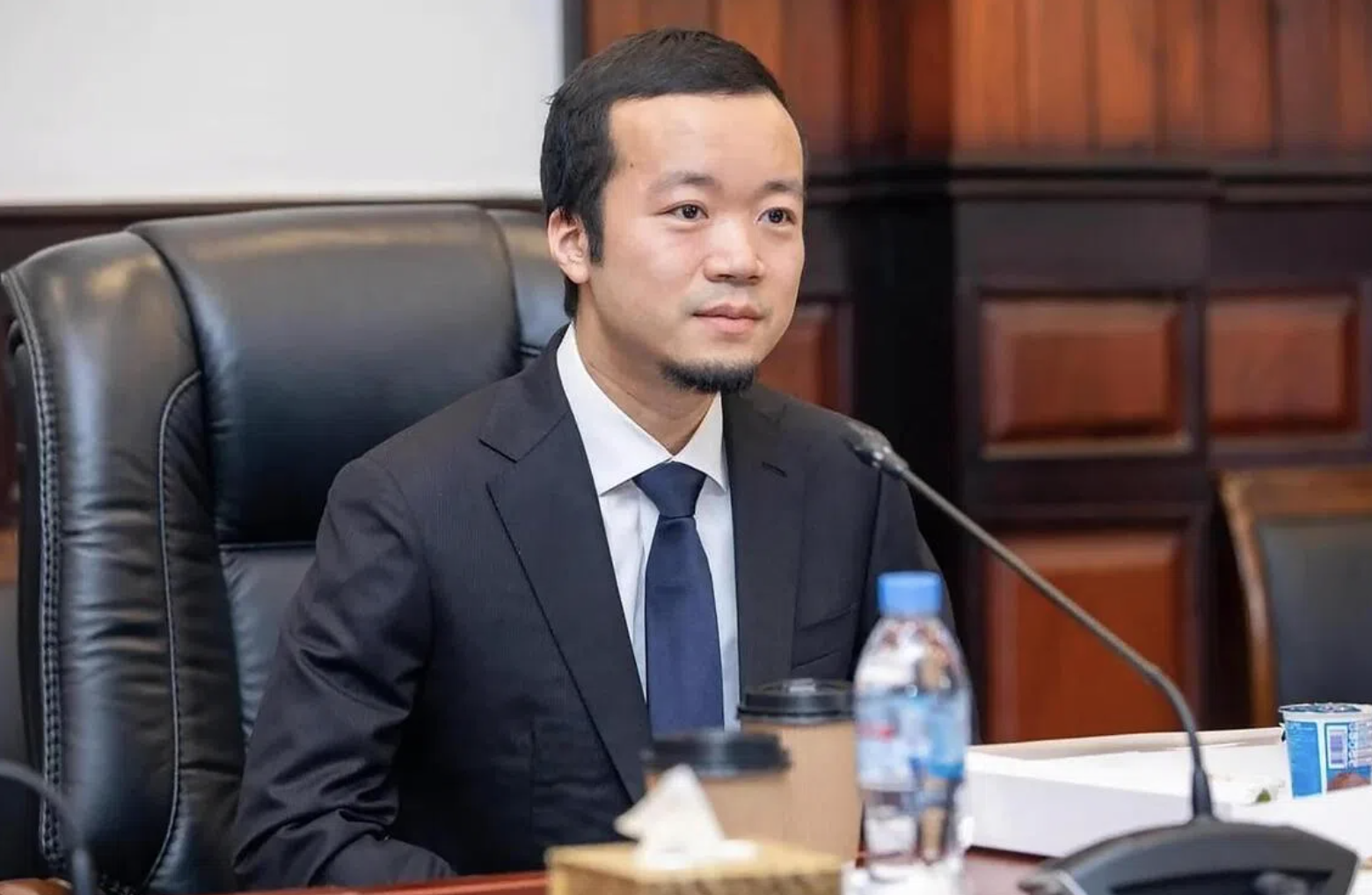
A multi-jurisdictional investigation has revealed the operational architecture behind one of the world’s largest cyber scam and money laundering networks. Centred around Cambodia-based Prince Holding Group chairman Chen Zhi, fresh disclosures from a US federal grand jury indictment, combined with corporate, land, and flight register checks, have unmasked key lieutenants who coordinated the syndicate’s security, corruption, and asset laundering functions across Singapore, the US, Mauritius, and Cyprus.
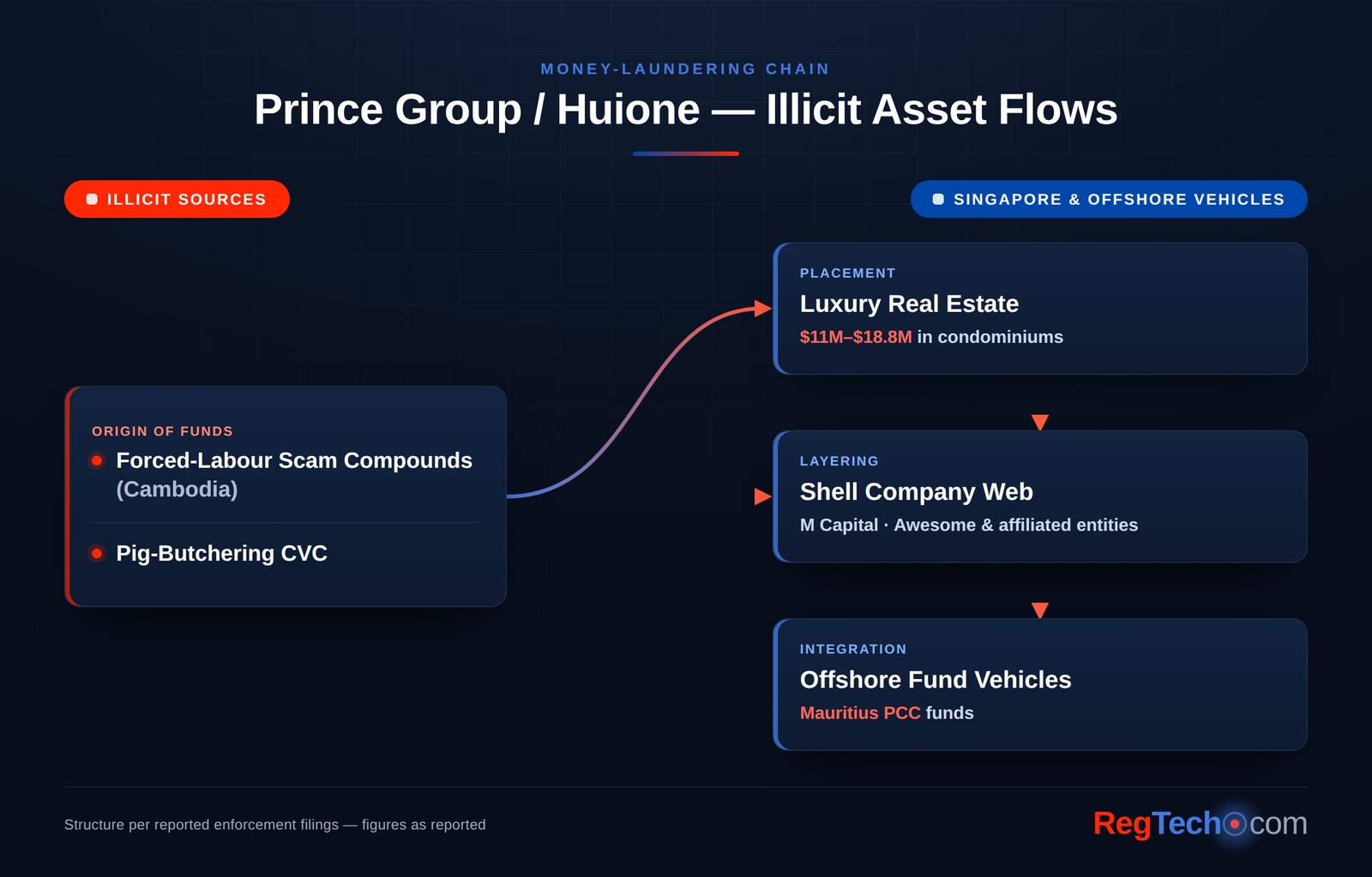
The findings highlight how high-level scam syndicate enforcers and money managers exploited multi-jurisdictional company creation, luxury real estate investments, and offshore fund structures to integrate proceeds from forced-labour scam compounds and pig-butchering operations into the legitimate financial system.
Unmasking “Co-Conspirator 2”: Chen Sokly
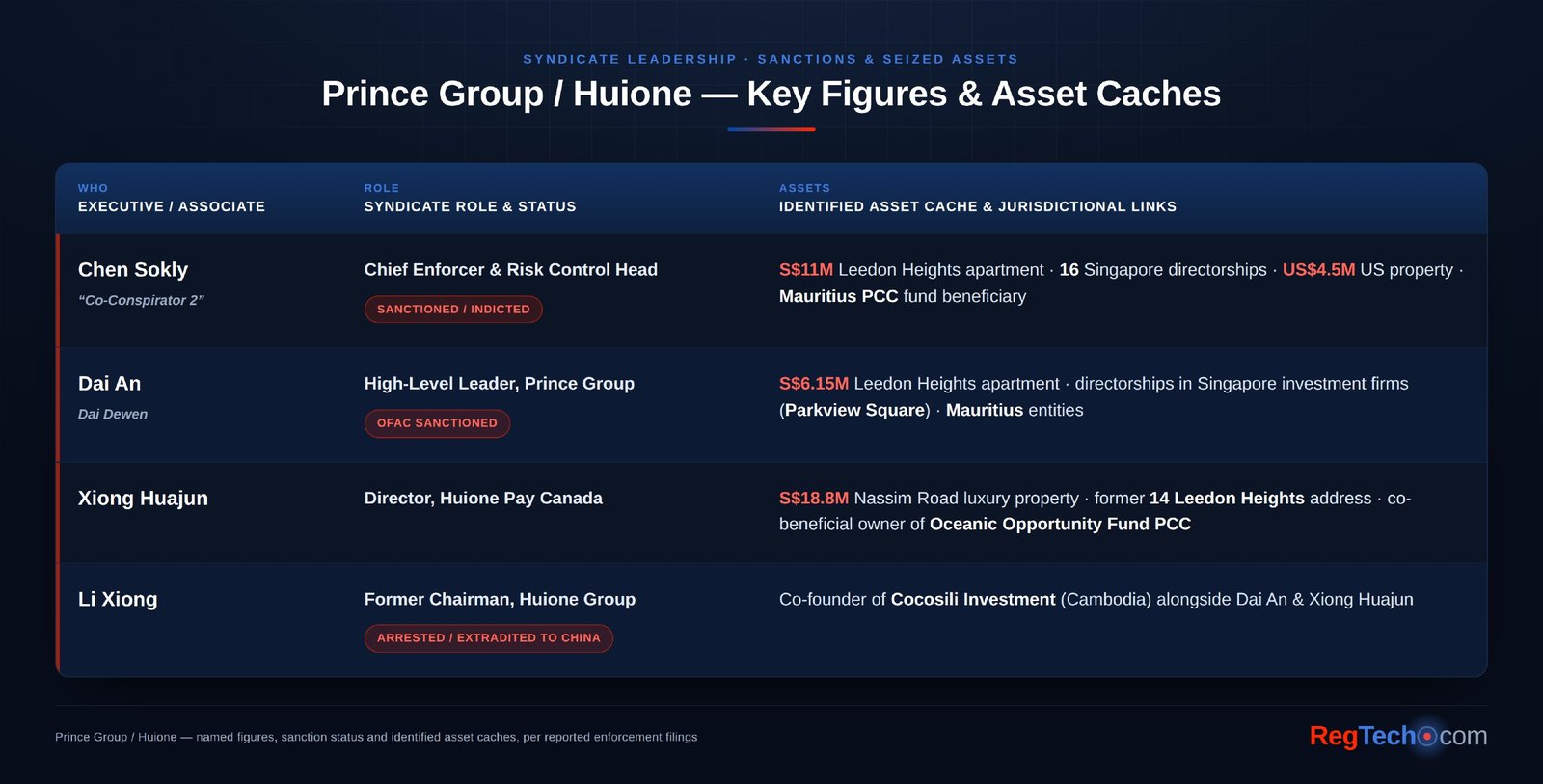
At the core of the disclosures is Chen Sokly (born Chen Xing in Shanghai in 1986, also known as “Martin Chen”), identified in US court filings as “Co-Conspirator 2.”
Sokly served as Prince Group’s primary enforcer and risk control manager, tasked with monitoring law enforcement investigations, directing corrupt bargaining with foreign officials, and maintaining internal group discipline.
According to US prosecutors, the network was generating up to US$30 million a day through illicit activities at its peak. Sokly’s operational footprint spanned several key jurisdictions:
- Singapore Footprint: Arrived in 2017 with the purchase of an S$11 million apartment at Leedon Heights. He incorporated M Capital Global Holdings (investing over S$5 million with his wife) and registered as a director across at least 16 local entities.
- United States Assets: Acquired luxury real estate in California in 2019 from a member of the Knight Attack cybercrime group, later transferring property into a family trust following US sanctions.
- Syndicate Governance: Managed the syndicate’s risk controls, allegedly purchasing a US$3 million yacht for a foreign government official in 2019 to secure regulatory immunity for scam compounds.
The Huione & Mauritius Infrastructure Connection
The investigation also exposes close operational ties between Prince Group’s network and Huione Group, a Cambodia-based financial services entity accused by the US Financial Crimes Enforcement Network (FinCEN) of laundering over US$4 billion in illicit crypto proceeds between August 2021 and January 2025.
Key Lieutenants & Asset Cache Summary
Triangulating the Multi-Nationality Threat: Have We Learned From 2023?
The 2026 Prince Group disclosures highlight a deeply troubling systemic trend: the exact vulnerability patterns identified during Singapore’s landmark $3 billion money laundering crackdown in 2023 have played out once again.
In September 2023, Chionh Chye Kit, CEO of Width, published a seminal analysis warning that money laundering syndicates systematically exploit multi-nationality setups to bypass traditional Customer Due Diligence (CDD). Chye Kit noted that when individuals of a specific ethnic origin or birth jurisdiction hold passports that do not naturally align with their profile (e.g., Cambodian, Cypriot, or Vanuatu passports obtained via investment), it serves as a primary signal of “concealed nationality” designed to evade home-country law enforcement.
This structural risk was formally codified by the Financial Action Task Force (FATF) and the OECD in their joint report, Misuse of Citizenship and Residency by Investment Programmes. The FATF explicitly warned that Citizenship by Investment (CBI) and Residency by Investment (RBI) programmes create acute global vulnerabilities by allowing criminals to:
- Launder Identities: Obtain new legal names and documentation to obscure prior criminal records and negative media screening.
- Bypass Geographical Risk Controls: Present “clean” passports from third-party jurisdictions to financial institutions, effectively lowering their automated KYC risk scoring.
- Infiltrate Corporate & Banking Ecosystems: Establish shell companies, open bank accounts, and move assets globally behind newly acquired legal personas.
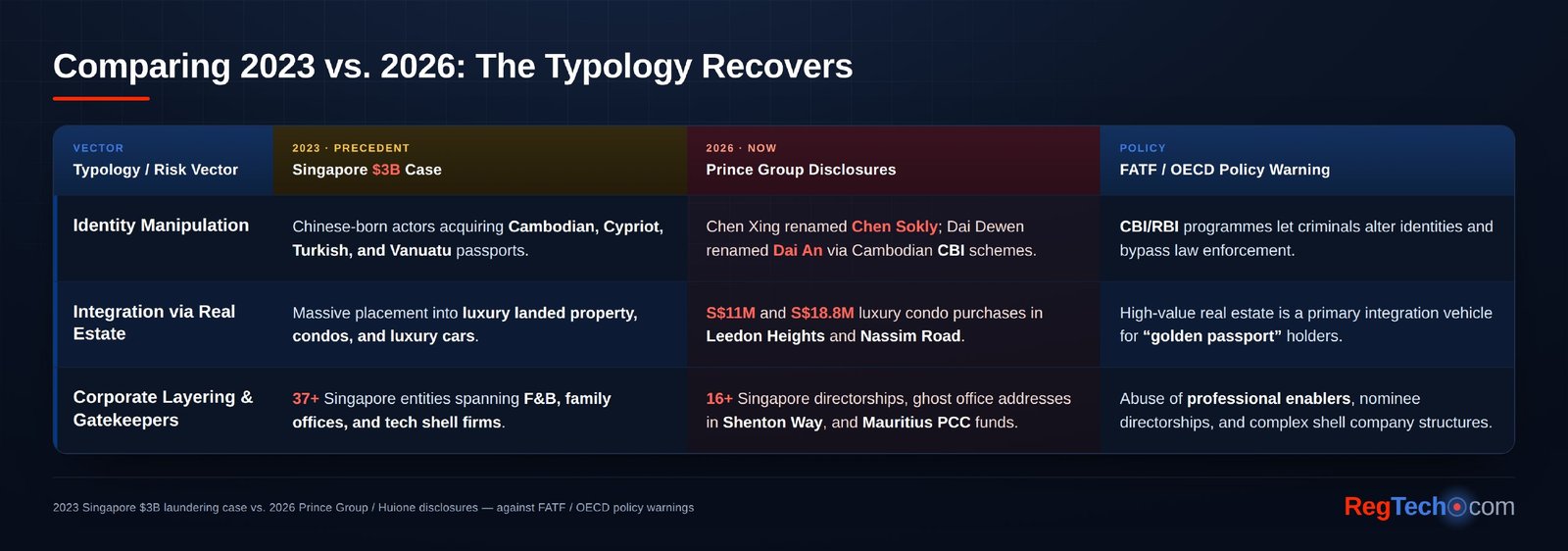
As we observed in 2023, while banks bear the brunt of regulatory scrutiny, the layering and integration phases rely heavily on Designated Non-Financial Businesses and Professionals (DNFBPs)—including corporate service providers (CSPs), real estate agents, and luxury asset dealers. The fact that Chen Sokly and Dai An successfully registered dozens of local entities and acquired tens of millions in prime Singapore real estate using altered Cambodian identities proves that gatekeepers are still treating identity documents at face value rather than probing the true source of wealth provenance.
“Compliance Officers should pay attention to clients who provide identity documentation that reflects a certain nationality that doesn’t immediately accord with the profile’s ethnicity, language, and understanding of the nature of business they are intending to operate in Singapore. This is especially important if these identification documents are issued by jurisdictions that have been flagged by FATF and OECD with potential abuse of their citizenship and residency by investment programmes. At Width, this issue has been incorporated into our proprietary risk assessment methodology since 2023.”
— Chye Kit, Co-Founder & CEO of Width
Strategic Takeaways for Compliance & Risk Teams
For Anti-Money Laundering (AML) officers, Virtual Asset Service Providers (VASPs), and corporate service providers, this case provides crucial operational lessons on detecting complex transnational crime networks:
- Multi-Identity & Passport Misuse: Syndicate executives systematically used Cambodian citizenship-by-investment programs to change legal names (e.g., Chen Xing to Chen Sokly; Dai Dewen to Dai An), obfuscating historical records across corporate databases.
- Nominee Directorships & Ghost Offices: Entities linked to the syndicate maintained registered office addresses in prime Singapore business districts (e.g., Shenton Way, Parkview Square) where no actual business operations occurred, with directors claiming “administrative” status without operational knowledge.
- PCC & Offshore Fund Layering: The syndicate utilised Mauritius-based Protected Cell Companies (Oceanic Opportunity Fund PCC) to route capital back into legitimate entities, including direct investments into Singapore-registered management vehicles and bank loans.
- Convertible Virtual Currency (CVC) Off-Ramps: Platforms like Huione served as “one-stop shops,” receiving pig-butchering scam proceeds in CVC and converting them into fiat or alternate tokens across nested digital wallets before integrating them into high-value real estate.
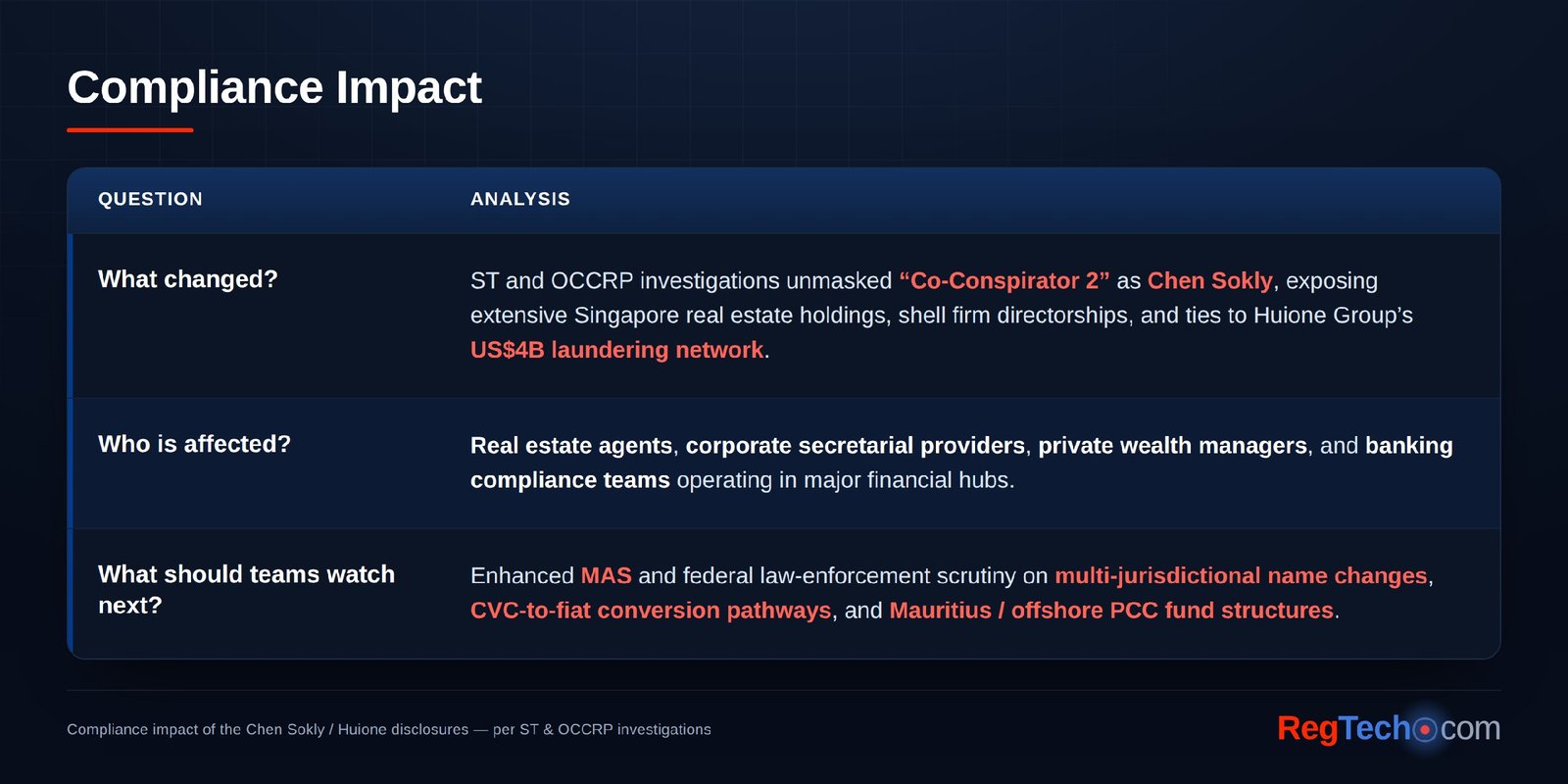
The unmasking of Chen Sokly and the broader Prince Group apparatus illustrates the extreme complexity facing anti-money laundering enforcement today. When transnational crime syndicates combine forced-labour scam operations with multi-jurisdictional corporate creation, private equity layering, and luxury asset acquisition, standard customer due diligence (CDD) is easily bypassed.
The repeating patterns between 2023 and 2026 demonstrate that regulated institutions cannot rely solely on static PEP and sanctions screening lists. As past events have highlighted, money launderers will exploit every technological and corporate avenue available. Regtech platforms must evolve to perform dynamic multi-nationality triangulation, cross-referencing CBI/RBI passport issuances, historical name changes, and offshore fund structures. Until gatekeepers look beyond superficial filings and mandate rigorous source-of-wealth attestation, illicit syndicates will continue to find shadows in global financial centres.
Read the full investigative journal at The Straits Times.