
ASEAN Tech Summit Manila 29 July 2026 - The panelists gathered to address one of the region’s most pressing risk vectors: the acceleration of AI-driven financial crime and the regulatory, technical, and architectural frameworks required to counter it.
Featuring insights from Chye Kit Chionh (CK), Co-Founder and CEO of AI-powered compliance platform WIDTH, alongside Prof. Ben Teehankee, Chairman, Responsible AI Council; Jose E. Cuisia, Professor of Business Ethics, De La Salle University, Erika Fille Legara, Managing Director and Chief AI & Data Officer of the Philippines' Education Centre for AI Research (ECAIR), and Carlo Chen Delantar, Co-founder and Partner of the Gobi-Core Philippine Fund. The panel examined how emerging technologies are reshaping the threat environment.
Key Takeaways
- Outcome-Focused Regulation: Rigid, highly prescriptive rules lag behind technological shifts. Regulators should adopt outcome-focused, flexible frameworks that encourage infrastructure investment while maintaining consumer safeguards.
- National Digital Identity as Critical Infrastructure: Implementing government-backed digital identity frameworks—analogous to Singapore’s SingPass—is foundational to reducing synthetic identity fraud across large populations, such as in the Philippines.
- The Three-Phase Control Model: Balancing user experience with security requires moving beyond static onboarding checks toward a tiered framework of preventive, detective, and predictive controls based on transaction risk profiles.
- AI Governance is a Board-Level Imperative: The rapid deployment of commercial AI models without corporate governance policies creates substantial legal, ethical, and litigation exposure.
- Data Sovereignty & Shared Liability: Retaining data sovereignty within national borders serves as an economic stabiliser, while tackling cross-border scams demands shared liability models across telecommunications providers, banks, and digital platforms.
The Governance & Architecture Roadmap
1. Forward-Looking Regulation & Digital Identity
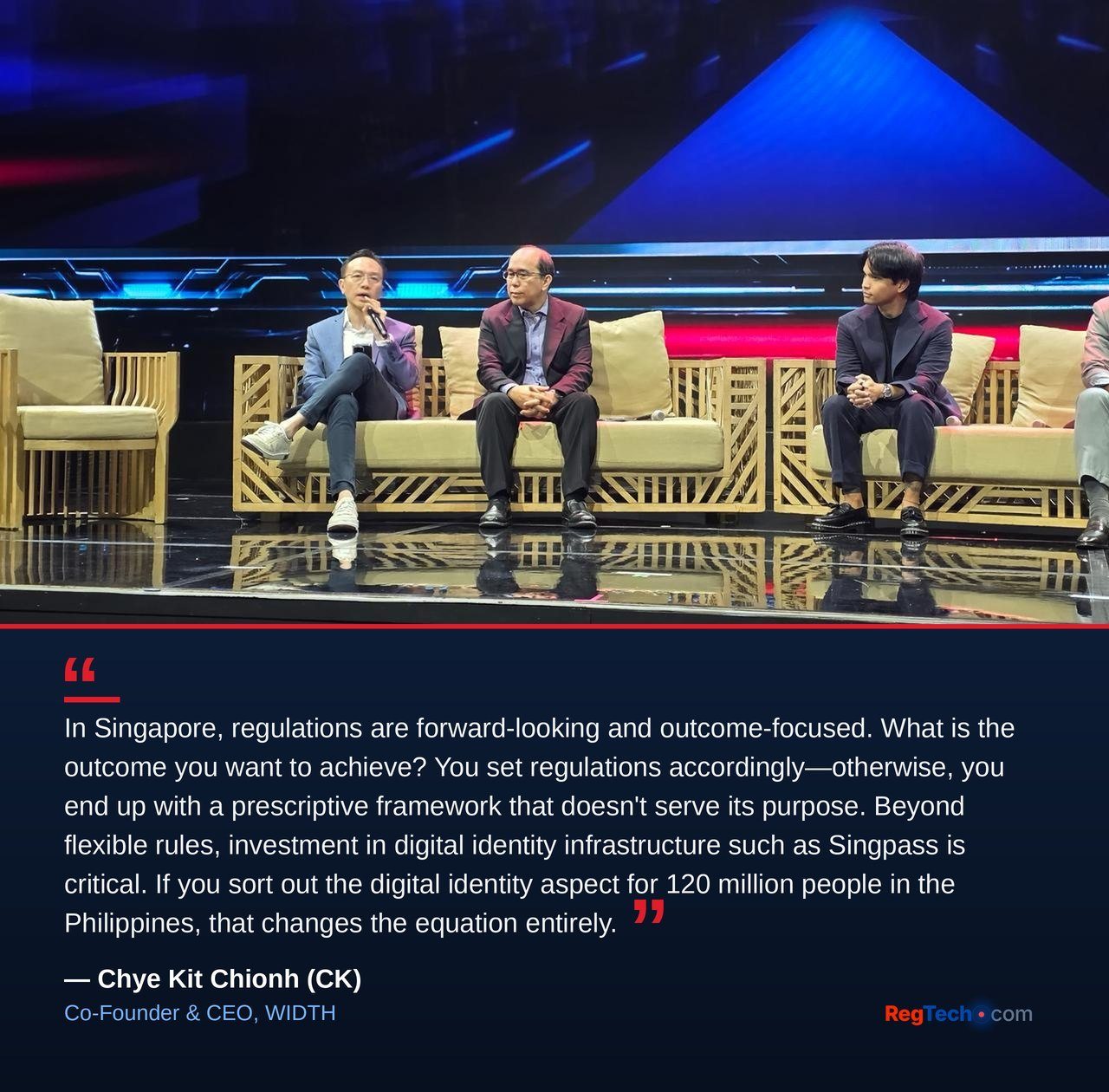
Addressing how developing digital economies can accelerate digital trust, Chye Kit highlighted that regulatory frameworks must prioritise end outcomes over rigid prescription. He emphasised that physical and digital infrastructure, specifically national digital identity systems, acts as the primary defence against systemic fraud.
2. Resolving the Friction vs. User Experience Dilemma
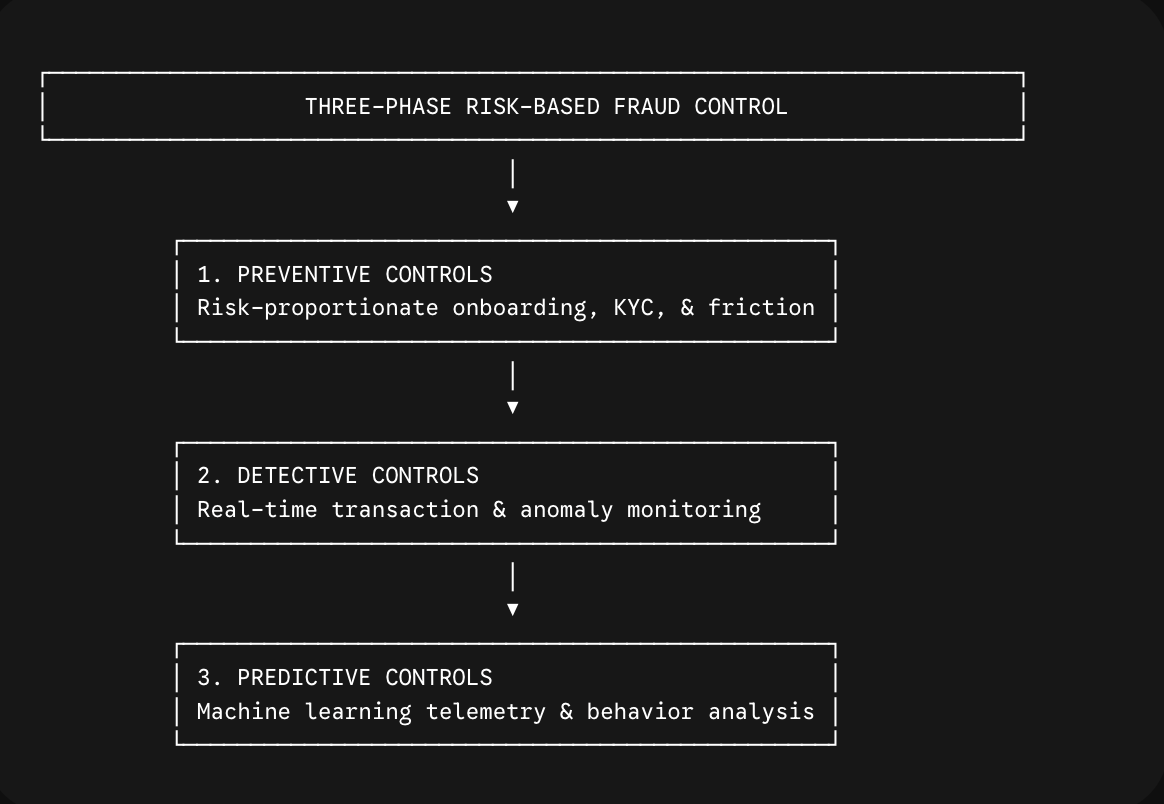
A recurring challenge for fintech operators is balancing fraud friction against customer conversion rates. Chye Kit outlined a three-phase risk-based approach to prevent unnecessary friction for low-risk users while protecting high-value rails:
- Preventive Controls: Applying rigorous verification and transactional friction primarily at onboarding or during high-risk, high-value operations.
- Detective Controls: Supplementing initial checks with continuous, in-flight transaction monitoring to catch active fraud vectors that bypass perimeter defences.
- Predictive Controls: Leveraging behavioural telemetry and predictive algorithms to identify suspicious patterns before fraud settlement occurs.
The AI Governance Gap & Institutional Risk
Representing the Responsible AI Council of the Philippines, Chairman, Prof. Ben Teehankee warned that the most immediate risk facing enterprises is not malicious AI models, but rather standard commercial AI tools deployed without internal ethical norms or safety policies.
- Declining AI Safety Scores: Major AI developers are increasingly prioritising speed-to-market and feature sets over safety compliance.
- Corporate Litigation Vulnerability: Many enterprises have integrated generative tools without establishing a formal AI governance policy, exposing organisations to data privacy violations, biased decision-making, and regulatory sanctions.
- Board Responsibility: Boards must implement comprehensive data governance frameworks and organise enterprise-wide training to educate staff on automated, AI-driven social engineering.
The Endless AI "Arms Race"
Highlighting the technical security landscape, the panel characterised fraud prevention as an ongoing battle where both attackers and defenders leverage identical machine learning models. Rather than viewing fraud defence as a finite problem to be solved, the panel recommended three operational mandates for risk functions:
- Threat Intelligence Mapping: Continuously tracking global vector shifts and adversary tactics.
- Deep Data Mastery: Establishing clean internal data baselines to detect subtle anomalies in real-time threat environments.
- Investigative Machine Telemetry: Strengthening internal investigation capabilities to handle automated, machine-driven attacks that suppress human response times.
Data Sovereignty & Shared Ecosystem Liability
Data Sovereignty as an Economic Shield
From an institutional investment perspective, Carlo emphasised that AI governance and data privacy policies have become mandatory due diligence items for funding. He and the panel identified data sovereignty, retaining and processing sensitive data within national boundaries, as both a national security requirement and a major economic opportunity. Enforcing localised data control prevents foreign exploitation while enabling domestic firms to build tailored AI applications.
The Shared Responsibility Model
When addressing complex scam chains that span telecommunication networks, messaging platforms, and banking rails, the panel rejected single-sector finger-pointing. Chye Kit and the panel affirmed that because financial crime operates across interconnected digital channels, liability must be shared across telcos, social media platforms, and financial institutions to drive coordinated disruption.
The RegTech Outlook
Navigating the next phase of ASEAN’s digital economy requires a fundamental shift in how risk functions approach financial crime